

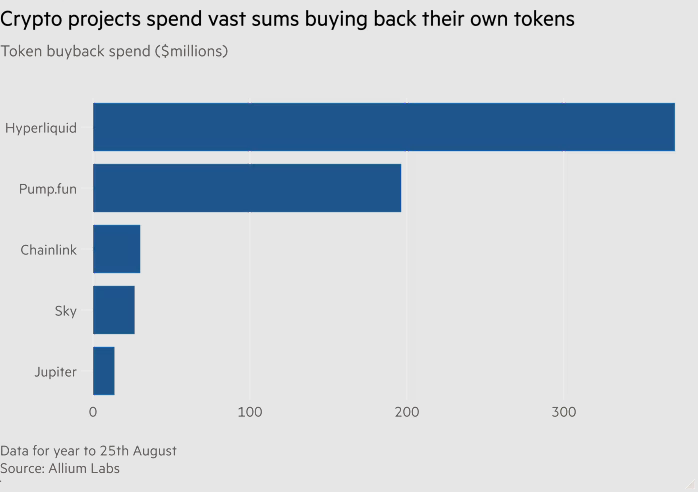
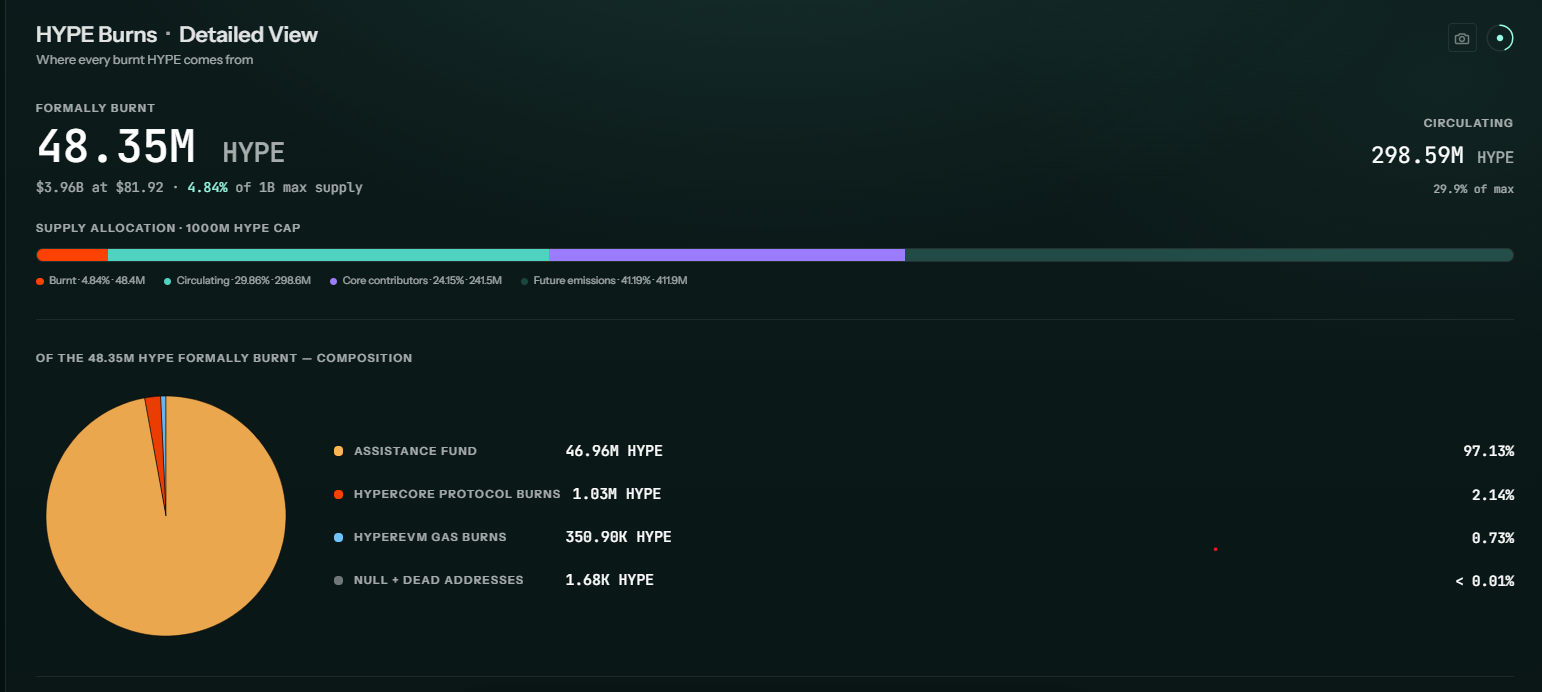
Crypto projects are borrowing a page straight out of Wall Street’s playbook, and the numbers show just how fast the trend is catching on. Token buybacks — using protocol revenue to repurchase and often destroy a project’s own tokens — have already cost the industry roughly $640 million in 2026, up 17% from the same period last year and a staggering leap beyond the $366,000 spent back in 2024. Two names dominate the spending: Hyperliquid and Pump.fun account for nearly 90% of it.
The pitch sounds straightforward enough. Buy back tokens, shrink the circulating supply, and in theory the price rises as scarcity kicks in. But beneath that simple mechanic sits a much thornier question, one that’s starting to divide the industry: is this genuinely sound business strategy, or just clever financial engineering dressed up to look like one?
Why Projects Are Buying Their Own Tokens
For years, crypto struggled with a fundamental disconnect — tokens often traded on hype and narrative rather than any real link to what the underlying protocol actually did or earned. Buybacks offer a fix for that, at least on paper. Orest Gavryliak, chief legal officer at 1inch, says the practice usually serves one of two goals: shrinking the token supply outright, or demonstrating to holders that protocol revenue justifies owning the asset in the first place.
There’s also a simpler communications advantage at play. Gavryliak notes that telling users a project has “bought and burned tokens” is a far easier story to tell than walking them through governance rights, fee mechanics, or how the protocol generates usage. Buybacks translate complexity into a single, digestible headline number — and in a market where attention is currency, that clarity has real value.
The approach varies significantly depending on the project’s philosophy. Hyperliquid takes the most aggressive stance, funneling 99% of its revenue into buying and burning HYPE. Pump.fun commits half its revenue to the same mechanism, having already erased $446.65 million worth of PUMP from circulation since it began the practice. Spark charts a different course entirely — rather than burning tokens, the DeFi infrastructure protocol has used surplus funds to acquire over 143 million SPK, holding them in treasury instead. According to co-founder and CEO Sam MacPherson, the goal isn’t simply reducing supply but creating a mechanism where committed, long-term participants benefit as the protocol grows, rather than treating tokenholders to a one-off distribution every time revenue comes in.
The Trade-Off Nobody Talks About Enough
Every dollar a protocol spends buying back its own token is a dollar it didn’t spend hiring engineers, expanding its product, or building a stronger balance sheet. That opportunity cost rarely makes it into the celebratory headlines, but it’s central to whether buybacks actually serve a project’s long-term health.
Max Shannon, senior research associate at Bitwise Europe, argues that buybacks remain an effective way to accrue value to holders because they create a continuous bid in the open market, directly tethering token performance to platform adoption. That’s a meaningful shift for an industry that has spent years chasing speculative narratives — nobody bought Fartcoin or Peanut the Squirrel because of a sound revenue model.
But MacPherson frames the calculus more bluntly: the real test isn’t whether a buyback feels good, it’s whether it represents “the highest-value use of the next dollar of surplus.” If a protocol could deploy that capital into growth at a better return, distributing it as an instant buyback might actually be the worse choice.
The price data backs up the skepticism. Pump.fun has been aggressively buying and burning PUMP since mid-2025, yet the token still trades roughly 50% below its September 2025 all-time high. Uniswap’s UNI has surrendered close to half the gains it made after unveiling its UNIfication proposal in November 2025. Shannon is careful to note that many factors influence price beyond buybacks alone, but the underperformance has still pushed investors to ask whether teams should be reinvesting more in the business itself rather than defending the token price.
Also Read: The $236 Billion Machine Economy Is Coming — and Crypto Wants to Be Its Bank
Not Quite Stocks, and Not Without Regulatory Risk
The comparison to corporate share buybacks is tempting, but it only goes so far. Shareholders own a legal stake in a company, often with voting rights and dividend claims. Tokenholders typically have none of that. As Gavryliak puts it, a buyback is “a market mechanism, not a legally enforceable entitlement” — a distinction that matters more than ever given how the regulatory landscape just shifted.
That backdrop became a lot more relevant this week. The CLARITY Act, the bill meant to settle exactly this kind of classification question, failed a Senate cloture vote 49-50 — one vote short of the 60 needed to advance — after Democrats raised objections tied to President Trump’s crypto holdings. Senator Thom Tillis has since moved to reconsider the failed vote, keeping a procedural path alive, but with the House out of session through late September and the Senate not returning until October 5, ahead of the November 3 election, there’s little runway left this year. Polymarket’s odds on the bill becoming law in 2026 have fallen to just 5%.
In the meantime, industry voices like Ripple’s Brad Garlinghouse are pointing to the SEC and CFTC to fill the gap through rulemaking rather than legislation. But that’s a weaker foundation for projects trying to plan buyback programs around a stable legal definition — agency guidance can shift with the next administration in a way a passed law cannot.
Under the framework the CLARITY Act proposed, the source of a token’s value is the deciding factor in how it gets classified. If value flows from the network’s own functionality, the asset resembles a commodity. But if it depends on a team’s efforts — shipping products, marketing, or engineering returns for holders — it starts to look far more like a security. That question sits squarely under a buyback program that exists specifically to reward holders and prop up price. As Gavryliak warns, “don’t put the clothes of a stock on the token and expect it to be a commodity” — and with legislative clarity now delayed indefinitely, that ambiguity is one projects running aggressive buyback programs will have to sit with for a while longer.
Disclaimer: The information in this article is for general purposes only and does not constitute financial advice. The author’s views are personal and may not reflect the views of chainrant.com/. Before making any investment decisions, you should always conduct your own research. chainrant.com/ is not responsible for any financial losses.