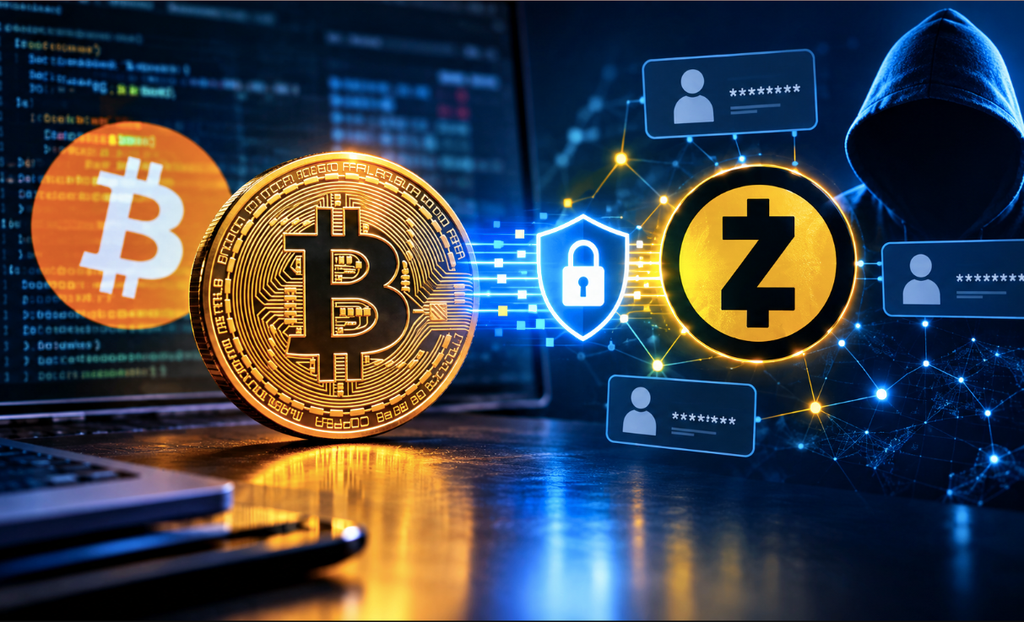



- Alloc Init’s Shielded Bitcoin proposal brings Zcash-style privacy (encrypted notes, zero-knowledge proofs) to Bitcoin without a soft fork, using off-chain indexers instead of miner enforcement.
- Critics like Vadim Zavodil argue a new shielded pool starts with zero anonymity set, weakening privacy guarantees compared to Zcash’s established pool.
- Reactions are mixed: quantum-resistance concerns were raised by Pierre-Luc Dallaire-Demers, while Zerocash co-author Eli Ben-Sasson voiced support for the underlying vision.
Bitcoin’s biggest privacy gap has always been structural: every transaction sits in plain sight on a public ledger. A new proposal from cryptography research firm Alloc Init claims it can fix that without asking Bitcoin’s core protocol to change at all.
The paper, titled Shielded Bitcoin, was published Thursday by researchers Clara Shikhelman, Mikhail Komarov, and Aleksei Moskvin. It outlines a way to hide transaction amounts, sender and receiver identities, and links to previously spent coins — using the same cryptographic tools that power Zcash. The twist is that none of it requires a soft fork.
How It Works Without Changing Bitcoin’s Rules
Rather than asking miners to enforce new privacy rules, the system treats Bitcoin purely as a place to publish and order data. Separate software, called indexers, does the heavy lifting — verifying zero-knowledge proofs, checking for double-spending, and piecing together the current state of the shielded system off-chain.
The architecture borrows heavily from Zcash’s playbook: encrypted notes representing value, public markers called nullifiers that flag when a note has been spent, and zero-knowledge proofs that confirm transactions are valid without revealing their contents. The key difference is that Shielded Bitcoin doesn’t run its own blockchain or consensus layer — it rides entirely on top of Bitcoin’s existing infrastructure.
Not Everyone Is Convinced It Solves the Real Problem
The reaction from the developer community has been split. Developer Vadim Zavodil argued that Zcash has already built most of this privacy stack, and pointed to a harder issue: a brand-new shielded pool starts with no users in it. His point was that privacy depends on having enough other transactions to blend into — something Zcash accumulated over years, and something a new system can’t just launch with.
The Shielded Bitcoin team appears to agree this is a real constraint. In a companion explainer, they acknowledged that simply attracting large deposits doesn’t automatically create meaningful anonymity, and that patterns in who creates notes or how wallets behave could still let outside observers connect the dots.
Separately, Pierre-Luc Dallaire-Demers of post-quantum cryptography firm Pauli Group flagged a different weakness: the system isn’t resistant to quantum computing attacks. He said he’s now looking into what a quantum-resistant version might require, though that would likely depend on Bitcoin itself adopting a new signature scheme first.

Not all the feedback was critical. Eli Ben-Sasson, co-author of the original Zerocash research and CEO of StarkWare, said the whole idea behind that early work was to bring privacy to Bitcoin in the first place. He hadn’t yet read the full paper but said he’d like to see this kind of zero-knowledge-based privacy actually take hold at Bitcoin’s base layer.
Why This Debate Matters Beyond Bitcoin
The exchange highlights a persistent tension in crypto privacy research: cryptographic tools have matured to the point where hiding transaction details is technically achievable, but privacy in practice depends just as much on adoption and network effects as it does on the math. A system can be flawless on paper and still offer weak real-world protection if too few people use it.
Also Read: Bitcoin’s Record Short Squeeze Just Hit a Wall — Here’s the Price That Decides Everything
Whether Shielded Bitcoin gains traction will likely hinge on questions the researchers themselves have already raised — how quickly it can build a meaningful user base, and whether its privacy guarantees hold up as more scrutiny arrives. For now, it’s a serious technical proposal that’s reopened a debate about what privacy on Bitcoin could look like, without needing Bitcoin itself to change.
Disclaimer: The information in this article is for general purposes only and does not constitute financial advice. The author’s views are personal and may not reflect the views of chainrant.com. Before making any investment decisions, you should always conduct your own research. chainrant.com is not responsible for any financial losses.