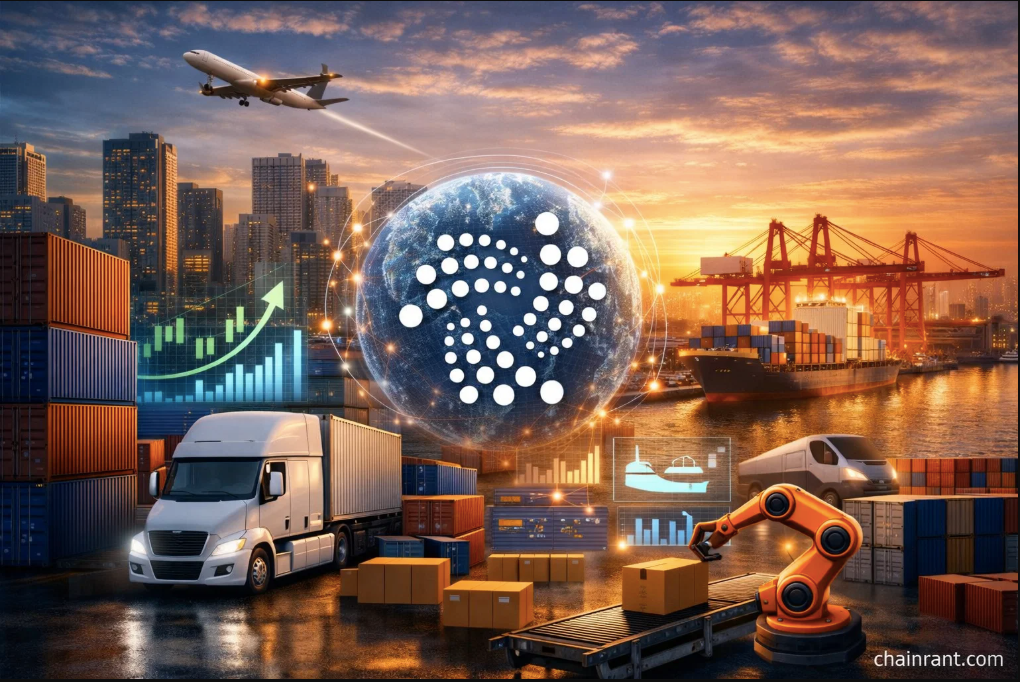

IOTA spent the third quarter making its network quicker, easier to verify and cheaper to run. The IOTA Foundation’s Q3 2026 progress report, published October 13, covers July through September and reads more like a mainnet maintenance log than a hype reel.
Starfish-Speed goes live on mainnet
The headline upgrade is Starfish-Speed, an extension of the Starfish consensus protocol. When network conditions allow, validators can now commit a block one round earlier, so transactions reach finality faster. The rollout was staged. Devnet got it in July, testnet in August, and mainnet in September.
Security reviews of consensus, networking and the API services also took place during the quarter, and the resulting fixes have shipped to mainnet. The core team’s next big target is P-COOL, a certificate-less transaction flow, with public-network stress testing expected next quarter.
Nodes sync faster and trust less
Node operators got some of the biggest quality-of-life gains. Nodes now bootstrap from formal snapshots that carry everything needed to verify them, so operators no longer have to take the publisher’s word for it. Formal snapshots are produced on testnet and mainnet at the latest epoch and at the start of each month. They replace the public RocksDB snapshots, which are discontinued.
Node sync is now 2.6 times faster, and a syncing node reports how far behind it is and when it expects to catch up. Nodes also keep epoch information back to genesis, so light clients can verify the chain from genesis through any fullnode serving the gRPC API.
Developer tooling and data services
The Rust SDK and its bindings for other languages reached their first beta, 1.0.0-beta.1, with documentation for every language. Local transaction simulation now matches what the node returns. Move gained view functions, giving apps a cheap and safe way to read onchain data, with support in the IOTA Move VS Code extension.
The public Indexer now keeps 30 days of data by default. Key lookups and transactions touching a specific IOTA address still reach older data through an archival store in both JSON-RPC and GraphQL. Other filtered transaction and event queries are limited to the 30-day window. Operators can restore an Indexer straight from a formal snapshot instead of replaying every checkpoint from genesis. Public gRPC, Indexer and API endpoints on devnet, testnet and mainnet are now rate limited to 100 requests per second per IP, so heavy-traffic apps will need their own node or Indexer.
The IOTA Explorer now opens on a network analytics homepage and labels known accounts. The wallet added a balance visibility toggle, a dApp gallery and fiat values. The EVM bridge now supports the Rabby wallet.
Research: Bluestreak and Vantage
The team prepared research on two new protocols. Bluestreak cuts block metadata to a constant size in uncertified DAG consensus protocols like Starfish. Projected onto IOTA mainnet, that works out to roughly a 75% reduction in consensus metadata. Vantage is a signature-free BFT protocol with multiple data proposers that matches the latency of signature-based designs. Both are research, not shipped features.
Real-world adoption and TWIN
Argentina’s national organ-transplant authority, INCUCAI, moved its institutional identities and document signing onto IOTA Mainnet with Extrimian. INCUCAI and all 24 of its provincial agencies now hold verifiable digital identities, and official documents are notarized on IOTA. No patient data goes onchain.
IOTA L1 also connected to Pyth Pro, and Pyth Core was retired on IOTA L1 on August 18. On the trade side, TWIN’s document extraction service now aligns with UN/CEFACT standards, and platform releases cut latency for shared consignment and document data by about 70% between core releases. The team says trade finance and payments capabilities built on IOTA’s L1 are in development.
On the marketing side, IOTA’s X posts earned 1.05 million impressions, with average reach per post up 64% on Q2 to around 15,900.
Disclaimer: The information in this article is for general purposes only and does not constitute financial advice. The author’s views are personal and may not reflect the views of Chain Rant. Before making any investment decisions, you should always conduct your own research. Chain Rantis not responsible for any financial losses.