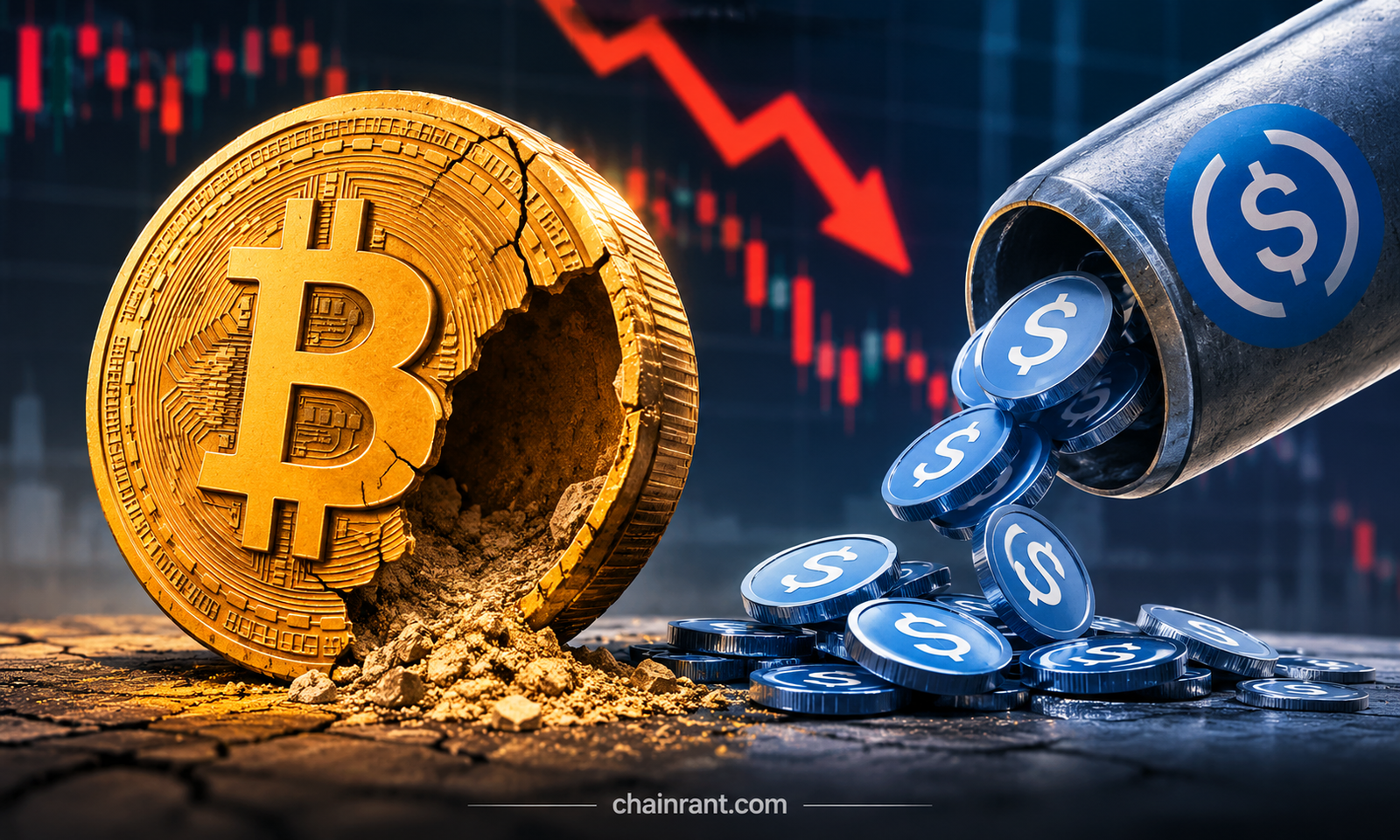



Every crypto downturn produces the same ritual. Prices fall, timelines fill with doom, and someone declares the industry finished. Look past the charts, though, and a quieter story is playing out. While traders argue about whether Bitcoin will hold $76,000, the people building the boring plumbing of finance are still hiring, filing and shipping.
A bear market by the numbers
The pain is real. Total crypto market value is about 38.5% below its October 2025 record of $4.28 trillion. The Fear and Greed Index sat at 28 on November 6, with Bitcoin down 6% in a day. The rally that followed the US midterm elections ran out of steam and a Wall Street sell-off hit crypto hard.
In markets like this, the speculative end of crypto gets exposed first. Tokens that depend on hype and fresh money need constant attention to survive. When attention moves elsewhere, they have little left to stand on.
The quiet signal from regulated players
Compare that with what is happening on the institutional side. Anchorage Digital has applied for CFTC swap dealer registration. That isn’t the move of a company waiting for the next price spike. It’s a company preparing to operate inside the regulated financial system for the long haul.
Nobody applies for swap dealer status because they expect to be gone next year. It signals that serious firms see crypto infrastructure as a permanent part of finance, and that they would rather work with regulators than around them.
Why tokenization is the better story
The strongest case for this view is practical rather than ideological. Much of traditional finance is slow, paper-heavy and expensive to verify.
Take trade finance. Every deal, whether it uses a letter of credit, a documentary collection or open account, depends on a funder trusting what it’s told: who the parties are, what was sold, and whether it really shipped. Checking all of that costs time and money, and on a smaller deal the return may not cover it. Funders pass, and smaller exporters get fewer options.
This is where a public ledger earns its place. On a network like IOTA, a record can be checked by anyone relying on it, not only by the party that created it. That doesn’t remove risk from a trade, and it won’t replace banks. It could lower the cost of confirming the basics, which makes smaller deals easier to fund.
That is a business case that doesn’t depend on Bitcoin’s price on any given Tuesday.
What this means for readers
None of this means every tokenization project will succeed. Many won’t. Adoption by banks, funders and traders is slow, regulation is uneven, and plenty of “real-world asset” pitches are just old hype with a new label. Skepticism is healthy.
But the contrast is worth noticing. Projects solving a specific, expensive problem in an existing industry can keep building through a downturn. Projects that exist only because prices were rising cannot.
It’s also worth noting that even the institutional bulls are leaning in on weakness. Strategy Inc. announced it bought 811 Bitcoin worth $65.5 million in a recent week. Conviction is still out there, but it’s increasingly concentrated in assets and infrastructure with a clear long-term purpose.
The bottom line
Bear markets are a filter. They don’t tell you which tokens will pump next quarter, but they do show who is building something that works when no one is cheering.
If you’re looking for where crypto’s next chapter gets written, look away from the price chart and toward the filings, the pilots and the unglamorous problems being solved. The memecoin crowd will return when prices do. The infrastructure builders never left.
Disclaimer: The information in this article is for general purposes only and does not constitute financial advice. The author’s views are personal and may not reflect the views of Chain Rant. Before making any investment decisions, you should always conduct your own research. Chain Rantis not responsible for any financial losses.