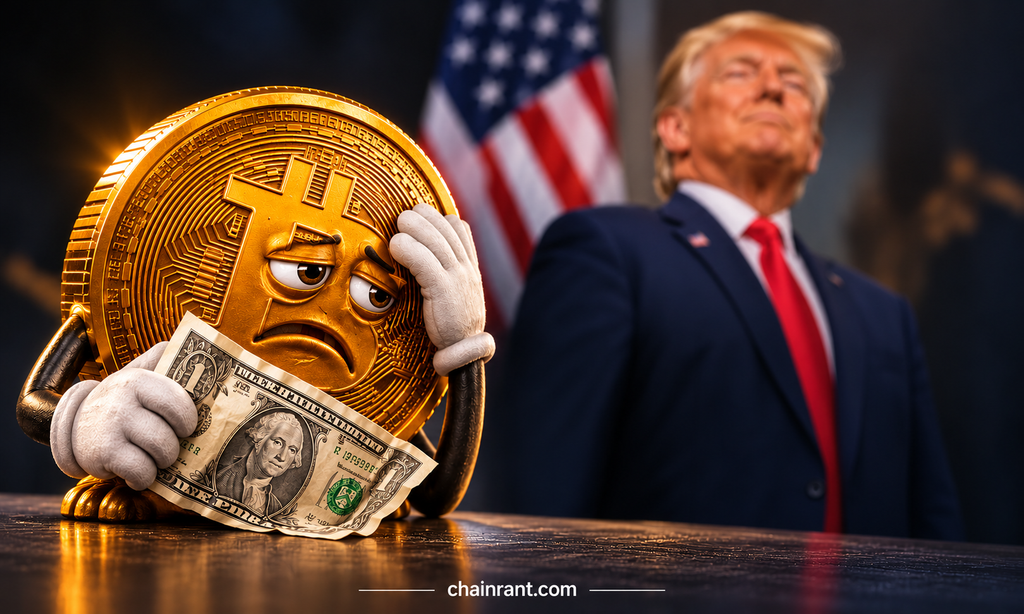



Everyone wants to argue about whether Donald Trump is good or bad for crypto. It’s the wrong fight. The better question is what the industry did when his family started cashing in on the same policies we were cheering for. We looked away, and that’s on us.
We Cheered the Wins and Skipped the Fine Print
The GENIUS Act was a real milestone. It created the first federal stablecoin framework, with 100% reserve backing in liquid assets. After years of being treated as a target, a lot of people in this industry felt vindicated, and prominent voices like Brian Armstrong, Brad Garlinghouse and Michael Saylor backed the president’s approach.
But the same moment came with a flashing warning light. The Trump family owns 60% of World Liberty Financial, which launched the USD1 stablecoin while the stablecoin bill was being debated. That is not a minor detail. It is the exact kind of conflict that a mature industry would have demanded be fixed before celebrating.
Our Biggest Ally Handed Critics Their Best Argument
When World Liberty announced a $2 billion deal between Abu Dhabi’s MGX and Binance using its stablecoin, Democrats pulled back from the GENIUS Act and called it a vehicle for “crypto corruption.” One report said Trump-affiliated companies held 80% of the $TRUMP memecoin and had collected more than $324 million in fees.
Decrypt noted that these conflicts dominated the debate and delayed the passage of GENIUS. Read that again. The industry’s own champion slowed the industry’s own bill. Meanwhile, the CLARITY Act failed a Senate cloture vote 49–50 in September, with disagreements over ethics provisions part of the impasse.
The Part That Stings
Here is my argument. Whatever you think of Trump, a politician will do what a politician does. He has a business, a family and an incentive. The question was never whether he’d mix them. The question was whether the people who claim to build a more transparent financial system would say anything about it.
Mostly, they didn’t. Crypto built its brand on rejecting conflicts of interest and opaque insiders. Then it applauded a president whose family earned money from the same rules. The industry asked the world to trust code over people, and then asked the same world to trust one person’s family because the policies were friendly.
There is a reasonable defense. The White House says Trump’s assets are held in a trust managed by his children, with no conflicts of interest, and the OCC has rejected allegations of improper interference. Supporters also argue that regulatory clarity was worth more than the optics, and that America can’t lead a race it refuses to enter. Those are serious points. A conflict is not the same as proof of wrongdoing, and the legal gains are real.
But even sympathetic voices admit the optics were bad. And in a trust business, optics are the product.
What We Should Do Now
The midterms handed Democrats Congress, and the next bill will come with tougher ethics language. The industry has two options. It can keep treating ethics rules as an attack, or it can sign on and use them as proof that crypto can regulate its own relationships with power.
Here is my bet on which one pays off. Accept the rules, name the conflicts and stop defending what can’t be defended. That’s cheaper than another failed Senate vote, and it would be the first time in years that the industry led on trust instead of asking for it.
Crypto didn’t lose credibility because of one president. It lost some of it because it decided the price was acceptable. Time to take it back.
Disclaimer: The information in this article is for general purposes only and does not constitute financial advice. The author’s views are personal and may not reflect the views of Chain Rant. Before making any investment decisions, you should always conduct your own research. Chain Rantis not responsible for any financial losses.