


Treasury Secretary Scott Bessent has spent recent weeks trying to keep a lid on rising bond yields. Now he’s facing pushback from an unlikely source: the man who taught him how markets actually work.
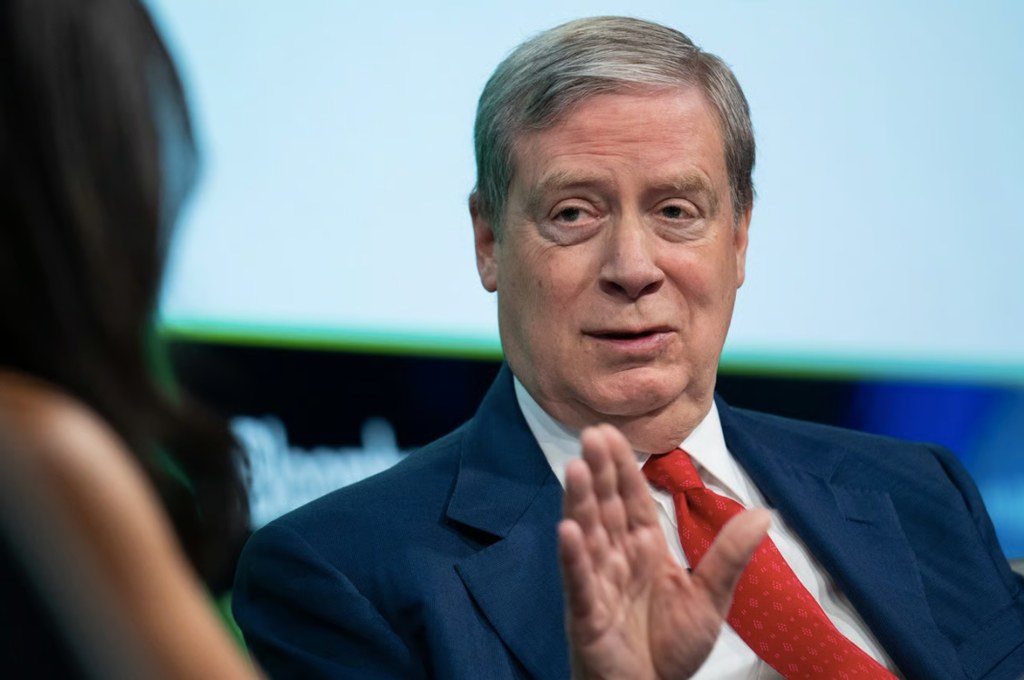
Stanley Druckenmiller, the billionaire investor who mentored Bessent and helped orchestrate the legendary bet against the British pound in 1992, says Bessent’s approach is not just ineffective — it’s dangerous.
What Bessent Is Actually Doing
With $4.8 trillion in debt issued in 2025 and an even bigger total expected this year, Treasury has leaned on a handful of tools to keep yields from climbing further. Bessent has floated doubling the department’s buyback program for longer-dated securities, a scheme that began under his predecessor Janet Yellen at roughly $2 billion a pop. Treasury has also reportedly considered tapping its $935 billion general account — essentially the government’s checking account — to fund additional bond purchases, and in July it stepped into currency markets to prop up the yen, a move that indirectly kept the Bank of Japan from selling off Treasurys.
The interventions have nudged longer-term yields down from levels not seen since before the 2008 financial crisis. But plenty of market watchers think the strategy is built on sand.
Druckenmiller’s Warning: You Can’t Fight the Math
In a Wall Street Journal op-ed, Druckenmiller argued that suppressing yields without fixing the underlying deficit just delays the reckoning — and makes it worse. With total U.S. debt now above $40 trillion and this year’s deficit on pace to top $2 trillion, he says the bond market is simply doing its job by pricing in risk.
His core argument: artificially holding yields down doesn’t remove pressure, it just stores it up. Once investors believe Treasury is defending a specific price level, he wrote, every subsequent yield spike becomes a test of resolve — one that eventually forces the government to spend more just to keep the illusion going.
Also Read: Ray Dalio Says US Debt Crisis Could Hit in 3 Years — Tells Investors to Buy Bitcoin and Gold
Why the Fed’s Silence Matters
Some strategists argue that without the Federal Reserve stepping in directly, Treasury’s efforts alone won’t be enough to move the needle. Fed Chair Kevin Warsh, however, has signaled he prefers letting markets set their own prices rather than intervening on Treasury’s behalf. That stance will be tested when the Fed meets in mid-September, and again this week at the Jackson Hole symposium, where Warsh could address the standoff directly.
For now, current yields on the 30-year and 10-year sit close to their long-run historical averages — a detail that has some economists questioning whether this is really a crisis at all, or just markets doing exactly what they’re supposed to do.
Disclaimer: The information in this article is for general purposes only and does not constitute financial advice. The author’s views are personal and may not reflect the views of chainrant.com. Before making any investment decisions, you should always conduct your own research. chainrant.com/ is not responsible for any financial losses.




1 Pingback